Repair or replace defective in-ground fixtures without tearing up the road?
Our method allows for the rehabilitation of non-functional in-ground fixtures directly through the street cover. The Pettenhofener Group Water Authority has applied this method to various fixtures that were no longer operable.
The Pettenhofen Group Water Utility Association presents an innovation for repairing water service lines.
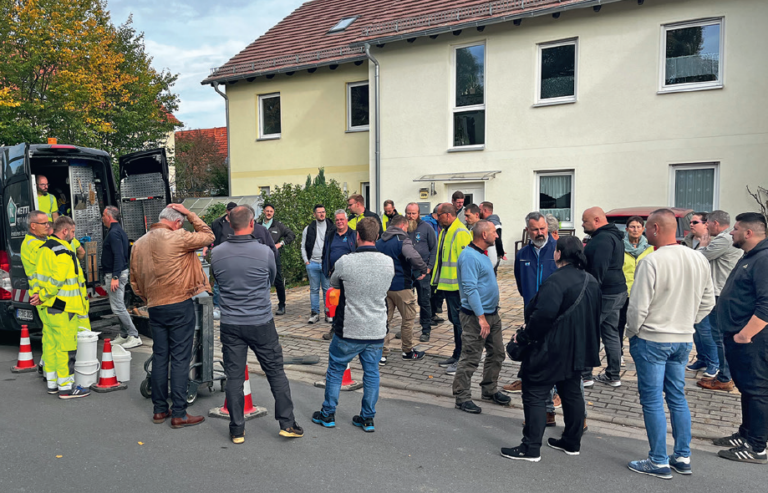
Lauterhofen. To eliminate the need to dig up streets when repairing water service lines, the Pettenhofen Group Water Utility Association has tested a new method. In an interview with our newspaper, Water Master Elmar Halk and the association’s chairman, Xaver Lang, explained the measures. They noted that the Pettenhofen Group already has more than 2,000 such access points. It goes without saying that such points will break down over a service life of up to 80 years, Halk said.
Until now, such repairs always required breaking up the road with an excavator, officials explained during the on-site visit. That was the only way to reconnect the pipes. This was particularly frustrating when the road was still in good condition or had just been repaved. The Pettenhofen group has found a solution to this problem, which was recently tested.
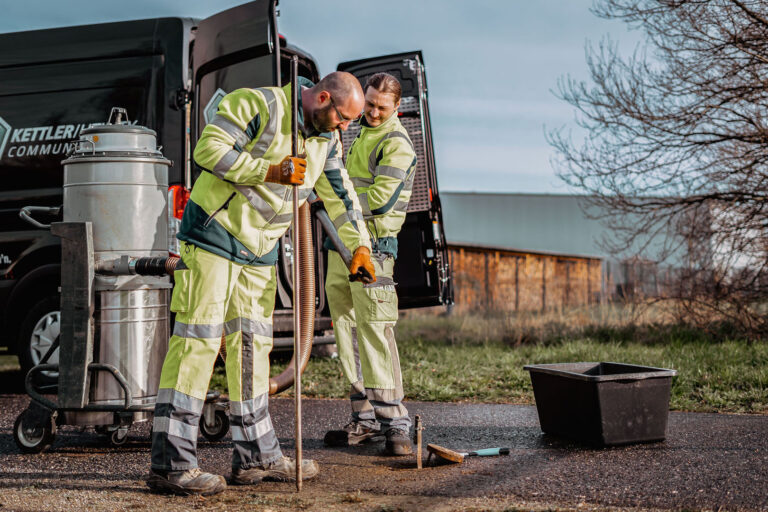
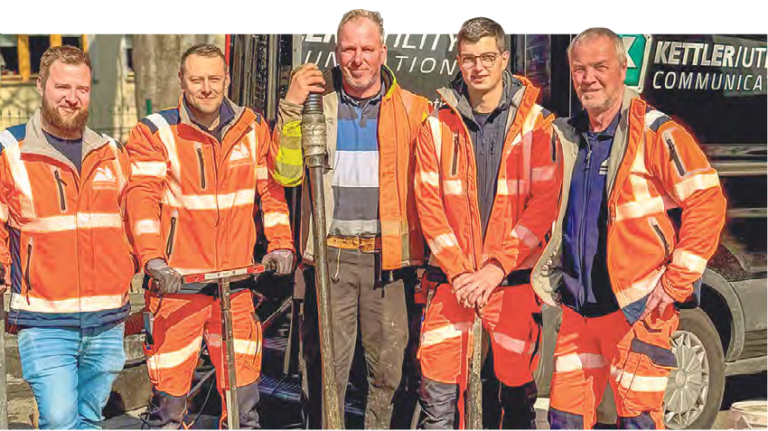
While searching for a trenchless method, Halk came across a company in the Ruhr region. The company has been successfully testing this method for a year and a half. Halk reported on site that, in consultation with the officials of the special-purpose association, he had decided to bring this innovation from the Ruhr region to the Upper Palatinate. Now, there is no longer any need for an excavator, a truck, or a paving crew to access the valve stems: Two technicians with a service van can now complete the same work in significantly less time.
According to Halk, this method is not a panacea—but it is certainly conceivable that faucets could be repaired this way in the future, Halk said. It is a cost-effective alternative that ultimately benefits consumers.
Here’s how the new method works: A circular manhole cover provides access to the area beneath the asphalt—the road’s frost protection layer. Using suction hoses and various other pieces of equipment, the soil is extracted upward along the valve linkage. Suction continues until a circular opening approximately 1.5 meters deep has been created all the way to the valve.
Once the square coupling has been successfully disconnected from the valve linkage, the new operating linkage can be installed on the valve. The resulting cavity is then filled with liquid soil, which prevents subsequent settlement on the road. The valve is then immediately ready for use. Depending on the difficulty, this type of work takes between one and a half and three and a half hours, according to reports. (nbs)
Source Neumarkter Tageblatt, March 24, 2027 issue