Interest in minimally invasive repairs is growing, particularly in situations where traffic areas need to be preserved as much as possible and disruption to the road structure must be minimized. But when is it appropriate to use underground valves? These valves must be reliably accessible and operable in the event of a malfunction or during normal operation. If a gate valve or other valve can no longer be operated, the cause is not necessarily the valve itself. Often, the connection between the street cover and the valve—the installation assembly—has been damaged, installed incorrectly, or compromised over time. Typical signs of damage include torn or bent linkages, silt buildup, improperly sized linkages, or missing components. Installation errors made during the construction phase can also impair operability later on, for example, if components were not installed properly aligned or were deformed by construction activities. As the operating element between the road surface and the valve, installation assemblies play a central role. Telescoping designs can compensate for varying installation depths and changes in position.
Access Without a Traditional Manhole
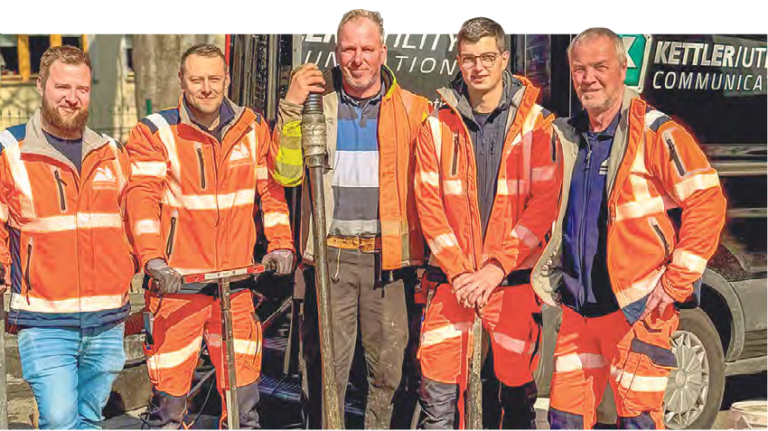
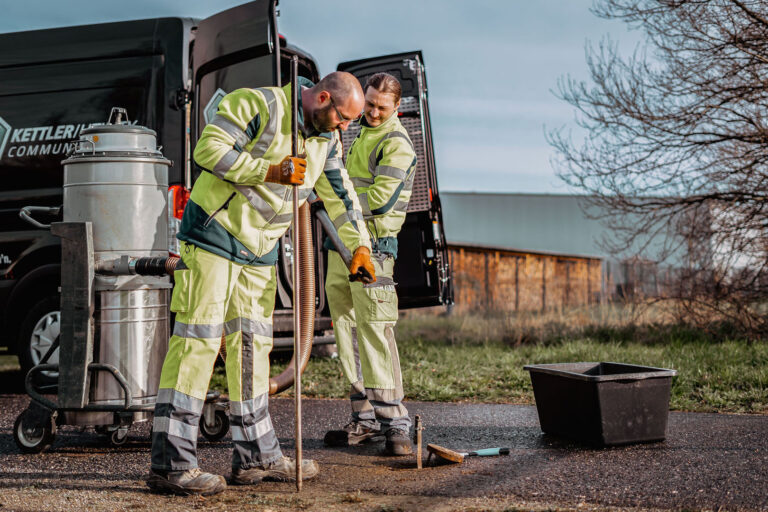
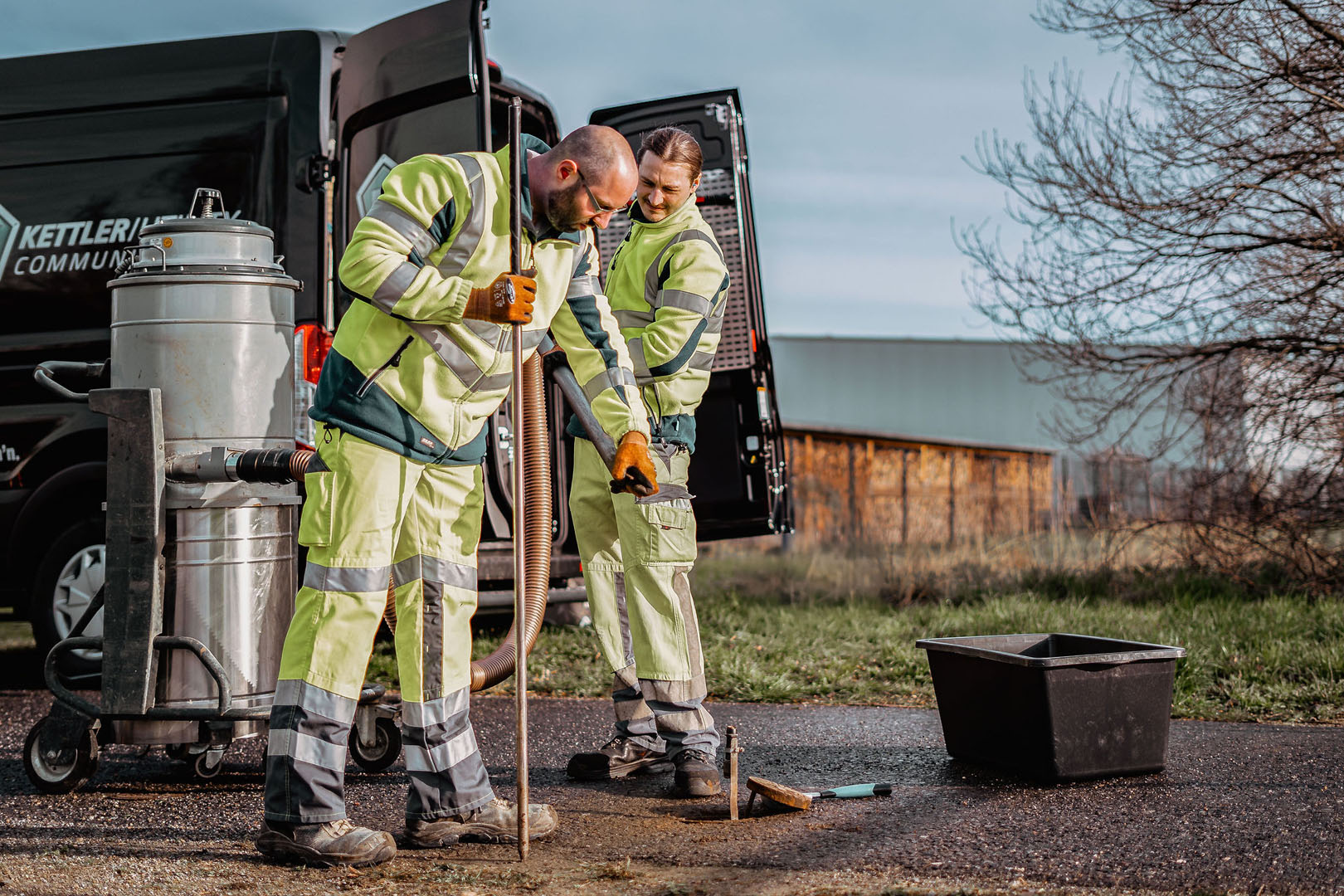
In the rehabilitation of utility line assemblies performed by Kettler Utility Communication GmbH, the damaged area is not exposed through a conventional manhole. Access is gained directly through the existing street manhole cover. After opening the cover, a ring-shaped work area is created using suction, extending all the way to the top of the fitting. Specialists then inspect the condition of the linkage, connecting elements, and valve spindle.
Depending on the nature of the damage, the existing valve assembly is repaired; however, it is usually replaced with a new telescoping valve assembly. The annular space is then backfilled with liquid grout. This ensures that the work is confined to the area within the manhole cover.
From Concept to Routine Maintenance Procedure
According to Kettler, the first measures of this kind were carried out as early as 2015. Since then, the procedure has been further developed and implemented in various utility networks. The core objective remains the same: to restore the operability of a fundamentally functional valve without having to excavate a large section of the roadway. For utility providers, a key advantage is that reported service interruptions can be resolved with minimal time and cost. This reduces both the duration of the work and the need to tie up the utility’s own personnel resources.
However, a few structural conditions are also critical. The manhole cover must be sufficiently sized—at least 80 mm in diameter—to allow for the installation and removal of the components. The installation depth also affects the feasibility of the procedure. According to Kettler, the practical limit is approximately 2.0 m.
Short construction time, minimal disruption
The rehabilitation process includes setting up the construction site, creating the annulus, conducting a condition assessment, repairing or replacing the lining, installing it, and then backfilling the area. Generally, this type of repair takes only a few hours, compared to a conventional civil engineering project involving excavation and subsequent surface restoration, which usually takes several days. This can be particularly significant in densely built-up areas and on heavily trafficked roads. Short work windows, smaller traffic areas, and lower noise levels facilitate the organization of such projects. When traffic volume is high, work can also be carried out at night.
User Reports: Reducing the Burden on Staff and Civil Engineering
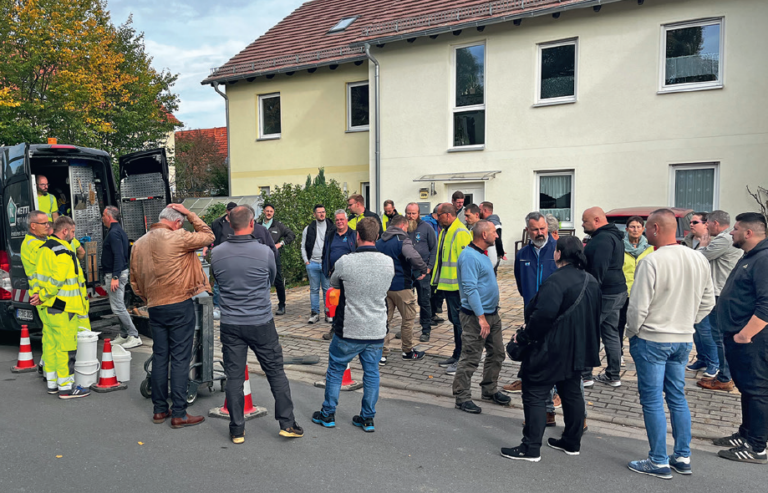
Statements from network operators who, by their own account, are already using the method illustrate how it is perceived in practice. Nils Dohmen of Regio-netz GmbH in Aachen sees particular advantages in staff retention and civil engineering costs: “I see the two biggest advantages in staff and cost savings. If we had to repair the poles ourselves with the help of a civil engineering firm, we’d likely spend two to three times as long on the project—plus the wait until the surface was restored. With the support of Kettler Utility Communication GmbH, we can deploy our own staff to other locations. Additionally, cost savings in civil engineering amounting to several thousand euros are possible.”
The Eisenberg Association for Drinking Water Supply and Wastewater Disposal also highlights the advantages in terms of traffic and construction time. Mr. Baumann explains: “Thanks to the short installation times and brief road closures, it was possible to replace fittings in urban areas—especially on heavily trafficked streets—in a short construction period and with minimal noise pollution.”
Mr. Scollick of WSW Energie & Wasser AG shares his experience over several years: “Since 2016, we’ve been contracting the company for one to two weeks a year to replace gate valves using trenchless technology. On average, we repair about 20 linkages per workweek. Most of the work can be carried out without causing major traffic disruptions. This method ensures that road surfaces still in good condition are not damaged, and prevents subsequent damage caused by frost.”
Conclusion
Rehabilitating in-ground valve assemblies via the street cap is a cost-effective and surface-friendly alternative to open-cut construction. Experience from recent years shows that when a malfunction is reported, the cause often lies not with the valve beneath the in-ground assembly, but with the in-ground assembly itself. According to Kettler, the gate valve remains functional in approximately 90 percent of cases. For utility operators, this method thus represents an additional component of their maintenance strategy: balancing short-term fault resolution, traffic management, and the preservation of existing traffic areas.