New Maintenance Methods for Underground Infrastructure
Dear Readers, have you met our valve maintenance crew yet?
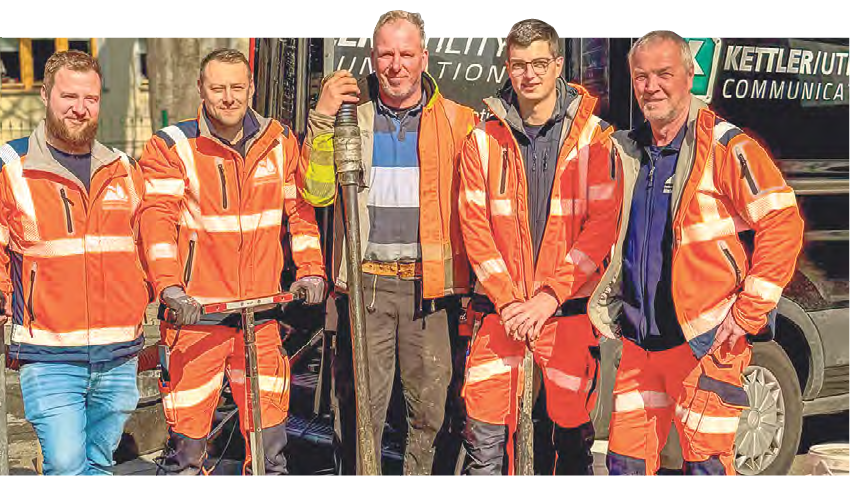
No? Today you’ll learn why you, too, benefit from these specialized professionals—because without these five men, your drinking water supply might also be at risk. The infrastructure buried beneath the ZVME service area requires a great deal of maintenance; otherwise, a failure in the drinking water network could quickly turn into a major problem:
If water leaks where it shouldn’t, or if flooding occurs. As fresh as the five experts in the photo look, they weren’t heading off on a health retreat in mid-March of this year—instead, they set to work with their usual expertise on Werner-Sylter-Straße in Bad Köstritz. Valve rehabilitation?
In technical jargon, this refers to the replacement of linkages and seals that are part of the shut-off valves on drinking water lines. A gate valve is used to completely open or close the flow in a pipeline. This allows certain sections of the pipeline network to be isolated for installation and repair work—for example, to prevent water flow in the event of a break. “Gate valves must always be in working order and are inspected regularly.”
"In Bad Köstritz, a total of three valve assemblies, including spindles and seals, had to be replaced this spring," explains Richard Wobst, master craftsman and head of the drinking water division at ZVME.
Depending on the road surface, the “treatment” takes about half an hour, but sometimes up to two hours. You don’t need a medical degree to replace the spindles, seals, and coupling sleeves, but you do need a great deal of expertise, experience, and skill, because “Patient Gate Valve” varies in age and is very unique: some are easy to cure, while others are difficult to revive.
Innovation Reduces Effort
ZVME employees received support from Kettler, a company that impresses with new surgical options:
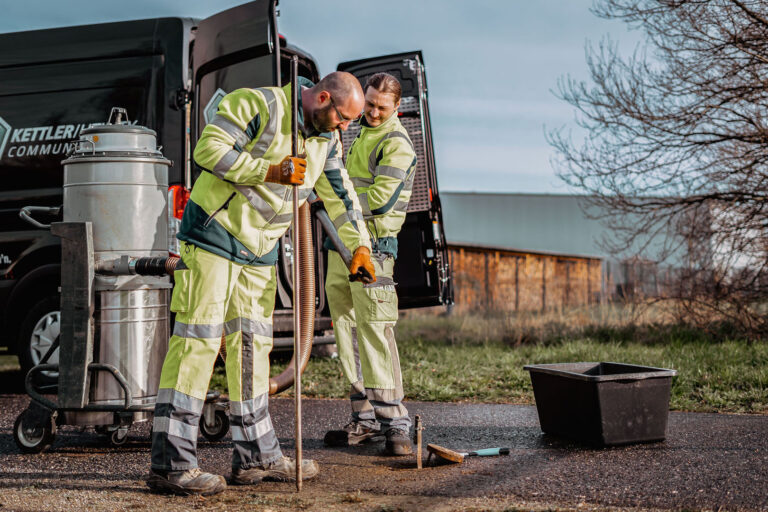
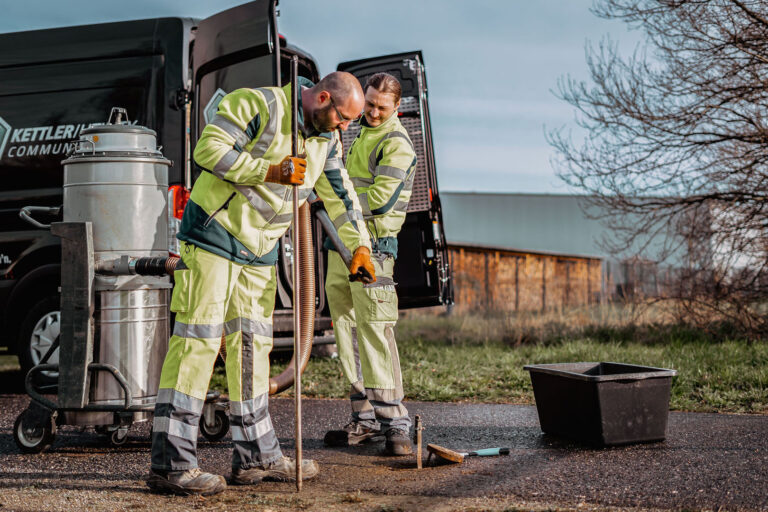
The installation assemblies are replaced directly through the manhole cover—a minimally invasive procedure, so to speak. The advantages: mobile equipment can quickly extract soil to a depth of up to two meters.
The fast-curing liquid soil keeps the procedure brief, and the asphalt remains intact. A healthcare system that works. You can learn more about exactly how Schieber-Reha works on page 4 with our photos.
Every step is carefully executed here: The valve cap is opened, and the soil is loosened using a chisel hammer and a telescopic lance.
An industrial vacuum cleaner is used to suck up the soil, sand, and stones around the existing gate linkage. Coarse rocks are sucked up and transported to the surface. The old gate linkage is dismantled with a great deal of experience and a bit of momentum.
Now the gate valve mounted on the drinking water line is clearly visible. Before installing the new valve linkage, the gate valve is checked to ensure it is in good working order.
The final step: The area is filled with certified liquid soil. It hardens within 24 hours. The road surface remains intact throughout the entire process.