In times of rising energy prices and high inflation, utility companies are paying particular attention to their budgets. One fixed cost is the maintenance and replacement of in-ground fittings used to operate shut-off valves on gas, water, or district heating lines. Conventional civil engineering measures for repairs are not only time-consuming and costly, but also require a great deal of coordination. Kettler Utility Communications GmbH has therefore developed a method that allows built-in fittings to be rehabilitated directly through the manhole cover. 3R visited a construction site for you.
Regionetz GmbH inspects its shut-off valves at regular intervals. During the most recent inspection, inspectors from the Aachen metropolitan region’s network operator noticed that the mounting assembly of a valve in Niederzier, near Jülich, was stuck. “This is definitely a system-critical water line,” says Elmar Frenken, senior expert for gas and water distribution network operations at Regionetz. He is standing at an intersection in Niederzier; at his feet are four manhole covers embedded in the road surface. The faulty valve lies beneath one of them. These valves allow the supply line to be shut off in the event of a leak or during construction work—but only if their controls are properly
Digital Coordination
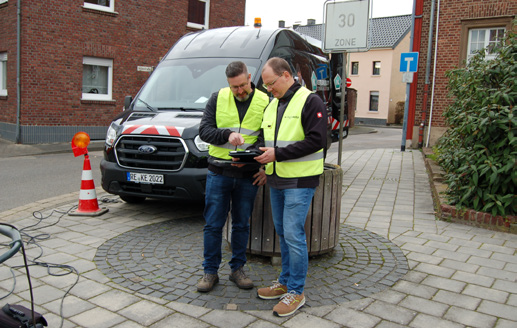
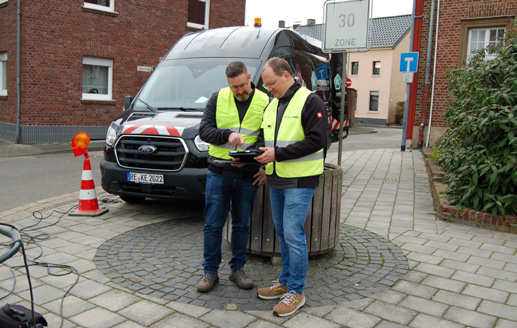
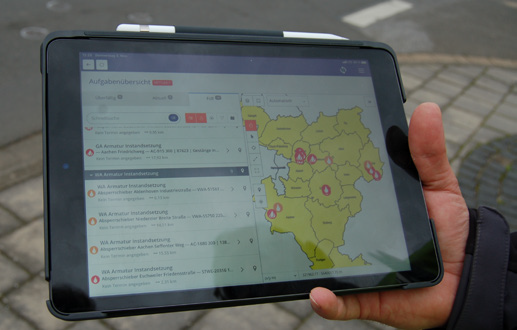
Frenken is holding a tablet. “The collaboration is entirely digital,” he explains. After his inspectors identified the defect, they marked it in Regionetz’s digital planning system. The network operator has been using the Lovion software since 2018. It serves as an interface between inspectors, coordinators, and partner companies. “The defects are collected and compiled into a list. I classify them later and add notes.”
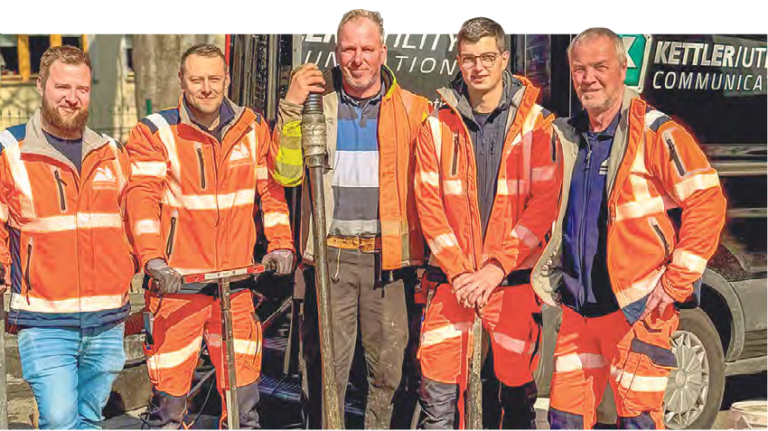
“Then I decide whether we can forward the case to Kettler.” Each case description includes relevant information about the fittings and piping, as well as a task status. If this status is red, Frenken has approved the order for KUC. Kettler Utility Communication GmbH (KUC) in Dorsten specializes in the rehabilitation of plumbing fixtures. Its customers include regional utility companies with which it has long-term framework agreements. Patrick Rosenberger, who is responsible for sales and coordination at KUC, estimates that there are about ten such customers so far. The company has been working with Regionetz for five years. Five to six times a year, his technicians travel to the network area.
“The guys work relatively independently,” explains Frenken. “On Monday mornings, they pick up a tablet with the Lovion software. The faulty fittings are displayed as red dots on a map. The technicians can decide for themselves in what order to tackle them. On Fridays, they return the tablet. By then, they’ve completed up to 15 repairs.” The fast pace of the work is made possible by KUC’s trenchless approach, which keeps noise, mess, time, and costs to a minimum.
Rehabilitation via the manhole cover
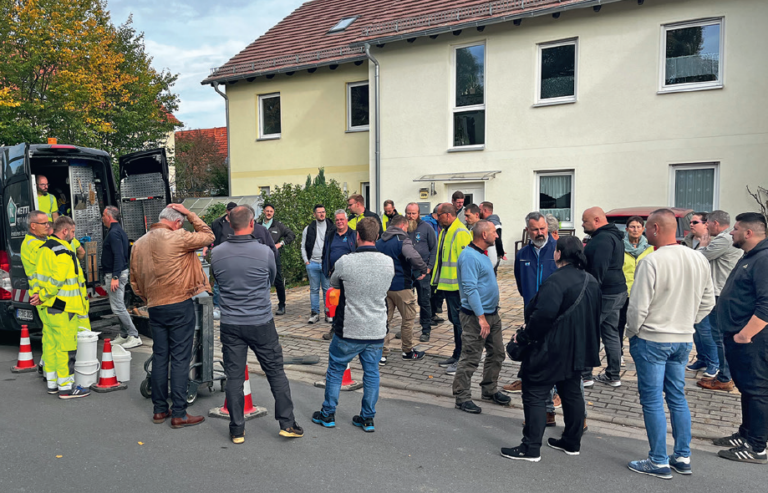
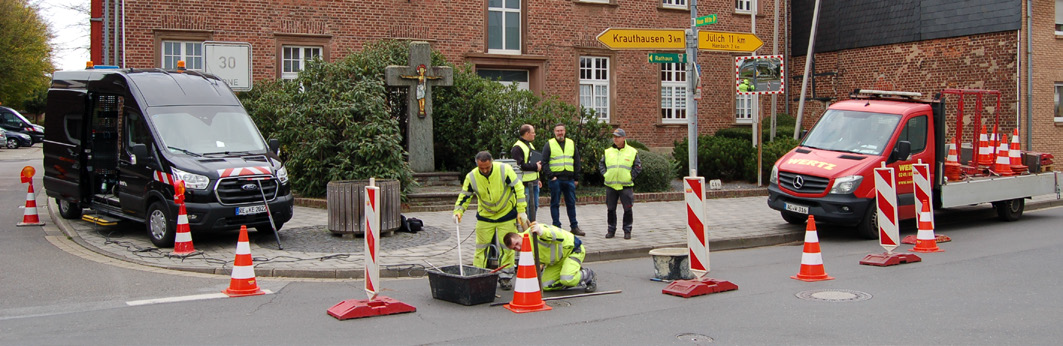
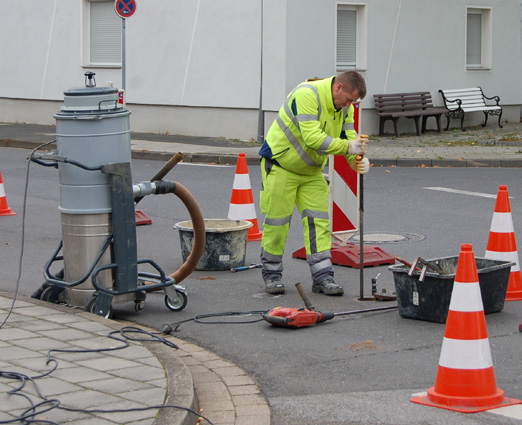
In Niederzier, they are waiting for the Wertz company to carry out the traffic regulation order (VAO). Frenken explains that this is only necessary for one in five projects: “It’s like a cascade: The inspector reports the defect to me, I forward it to the KUC as a project, and they arrange for the service provider to handle the VAO, who in turn handles everything with the municipality.” Today, the VAO is handled quickly, and traffic is not disrupted by the signs that have been put up.
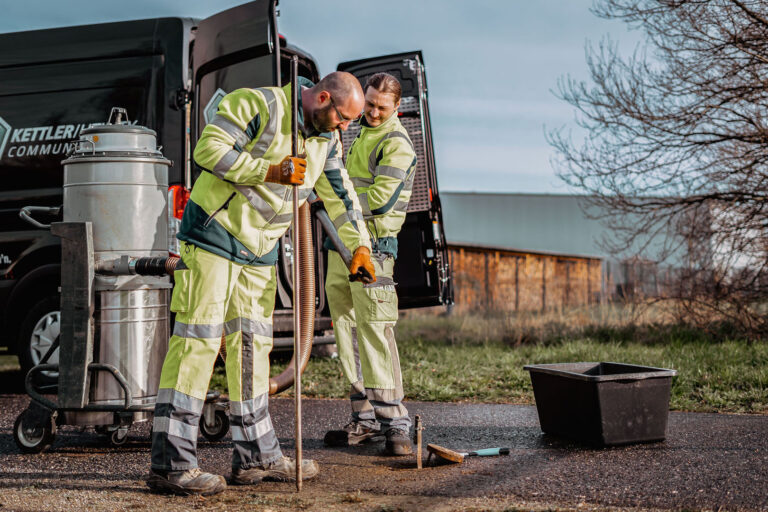
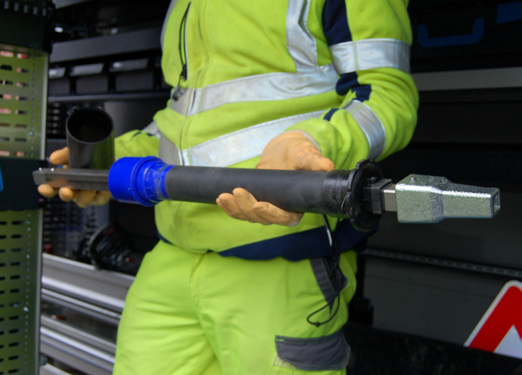
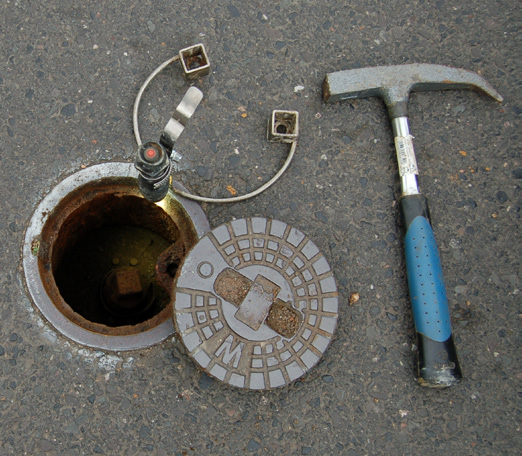
This is different from regular civil engineering projects, explains Frenken. Especially in large cities, traffic is often disrupted for days on end. First, the KUC technicians open the manhole cover. Using a telescoping lance, they break up the soil surrounding the valve linkage of the installation assembly. A large industrial vacuum cleaner removes loosened road material such as sand and gravel. Gradually, a ring-shaped space emerges that extends all the way to the top of the valve. KUC has designed its own tools for the subsequent steps. The defective installation assembly is removed through the ring-shaped space created earlier without damaging the valve beneath it. Rosenberger and his colleagues are relaxed: the shut-off valve is located just under 1 m deep. “The method works down to a depth of 2 m,” says Rosenberger. For deeper valves, each case must be evaluated individually.
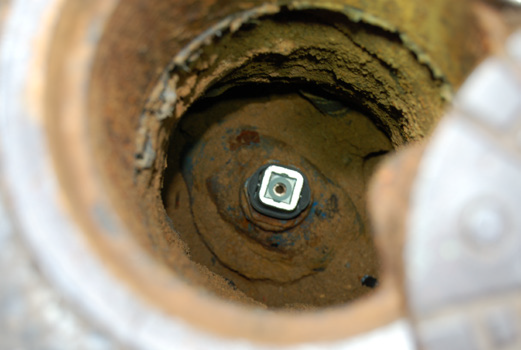
“Our deepest one was 2.60 m underground.” “It’s completely clogged,” comments the technician after pulling the last piece of the valve assembly out of the hole. Water and sand had seeped through the protective pipe into the valve assembly, and the operating rod was jammed. “And this is a relatively new valve assembly, from 1997,” says Frenken. He’s curious to see if the shut-off valve will work again with new operating elements: “Otherwise, we’d have to resort to civil engineering work and replace the valve. But that’s the exception.” Using a special release rod, the technician pushes the bolt out of the square socket. Now a new coupling sleeve can be fitted onto the valve. It serves as the base for the new valve assembly. Rosenberger’s colleagues have a whole range of them in their delivery van—various wall thicknesses, all telescoping and made of stainless steel. Kettler GmbH originally focused on the manufacture of installation kits; the rehabilitation process was later developed as a complete service package and outsourced to Kettler Communication Utility GmbH.
Using an extra-long Vario operating key, the shut-off valve is now tested for proper function beforehand. An initial test makes Frenken happy: “The valve is fine; the problem was the control element. A typical case. Using the conventional method, we would have had to shut off the entire intersection and dig a 4 m² hole by hand.” Now the new installation kit can be guided into the ring space and mounted on the dome socket.
“When we’re done, you can start filming”
In the final step of the rehabilitation process, the crews pour pre-measured liquid soil into the annulus. This prevents the formation of a void that could cause the road surface to sink. Today, the entire process took just under an hour and a half; two hours is the norm. The KUC crews take photos to document the completion of the work.
In the Lovion system, they can add photos of the work and mark it as “completed.” Normally, Frenken would then virtually inspect the results and forward them for billing: “What’s innovative is the overall concept,” says Frenken. “We don’t know of any service provider that works this way. By the time they leave, everything is done to perfection.” KUC has already carried out nearly 400 rehabilitations for Regionetz; the total number runs into the several thousand. According to Rosenberger, Kettler is working on expanding the scope of the process to include deeper-seated fittings and additional cap sizes; currently, rehabilitation is possible for pipe diameters ranging from DN 40 to DN 300. In addition, the process is also used for larger nominal diameters and various types of fittings following a technical review. He isn’t worried about the future: “In Germany, there are nearly 5,000 utilities that need to maintain their installation fittings. Our process stands out for its speed, flexibility, and cost-effectiveness compared to conventional methods.”
Photo Gallery
Source 3R-Rohre, Issue 12/2022 (pp. 59–61)